
Puffins on Runde – Norway's Bird Island
Late May 2024, four days on Runde: the small island off Norway's west coast hosts one of Scandinavia's largest bird cliffs — half a million seabirds, among them tens of thousands of Atlantic puffins. Climb to the breeding cliff in the evening and sooner or later you are sitting in the middle of the colony. A field report about birds that never learned to be shy, and the gear to match.
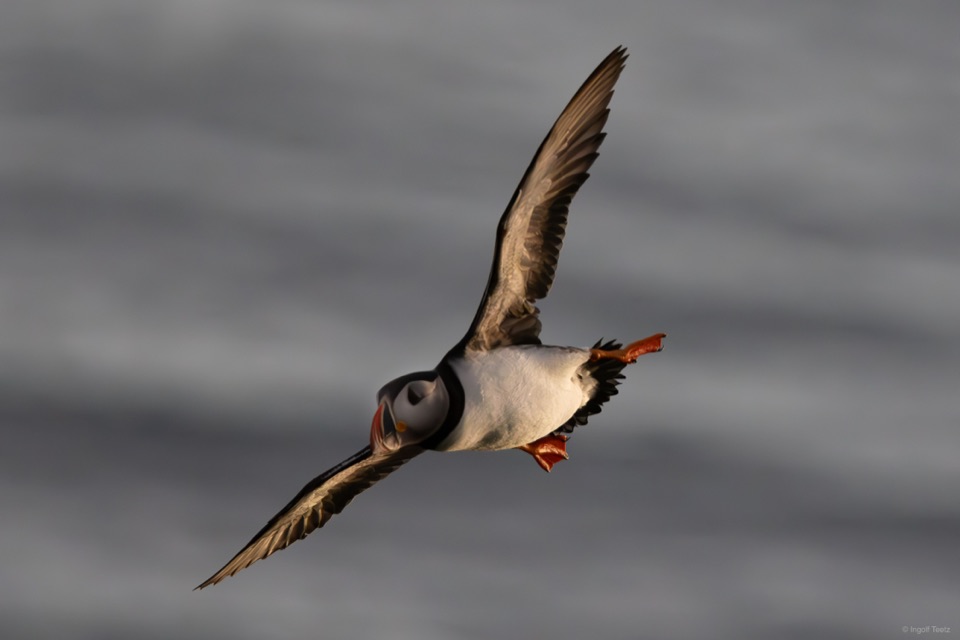
The best hours start at ten in the evening
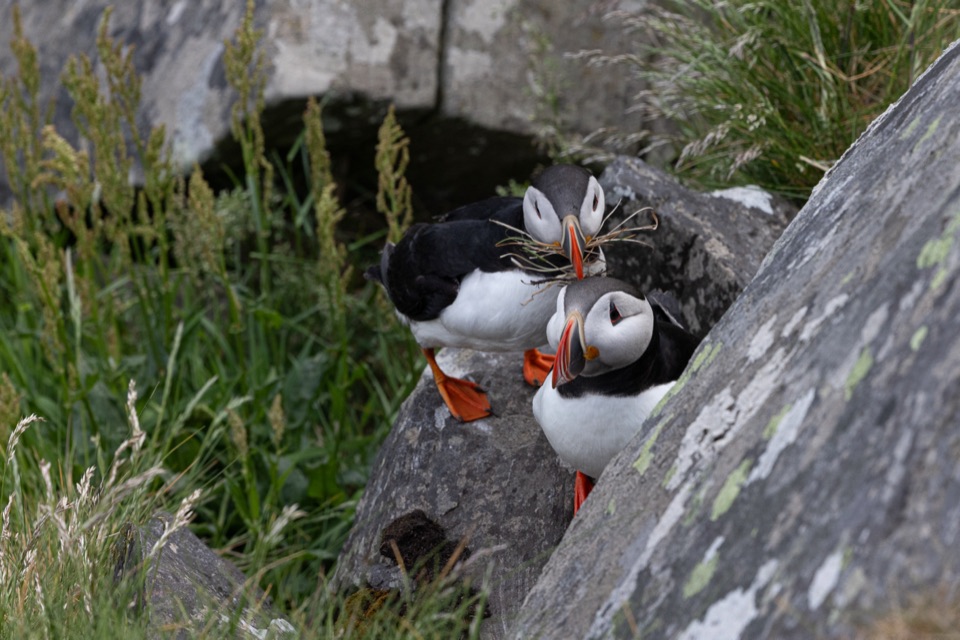
Puffins spend the day at sea. Only late in the evening do they return by the thousands to Runde's grassy cliffs — and since the sun barely sets in late May, their homecoming lands right in the best light. The climb to the breeding cliff takes a good hour; at the top you sit down in the grass, wait, and after twenty minutes the first birds land two metres away. Shyness is simply not a category here: stay calm and you become part of the scenery.
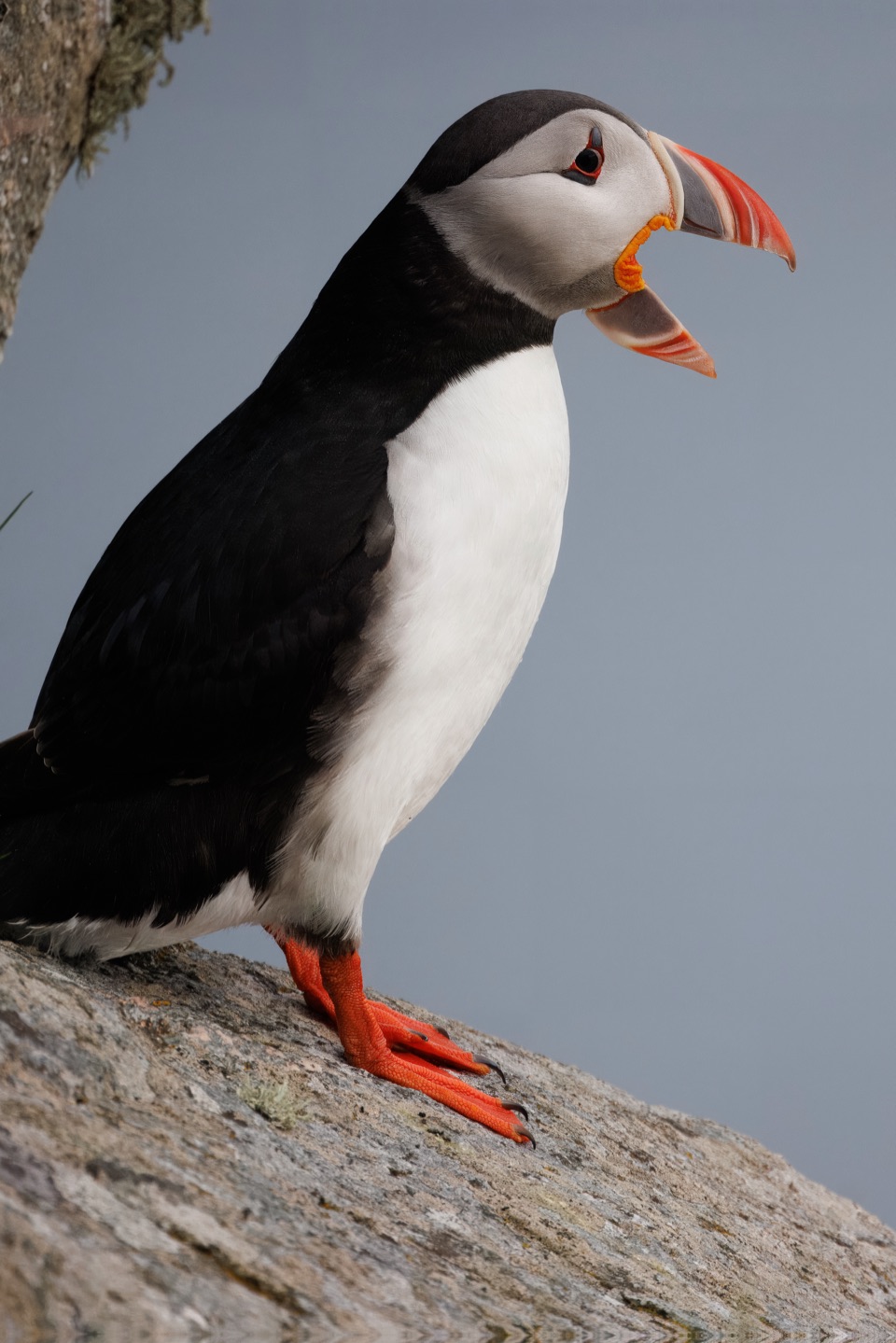
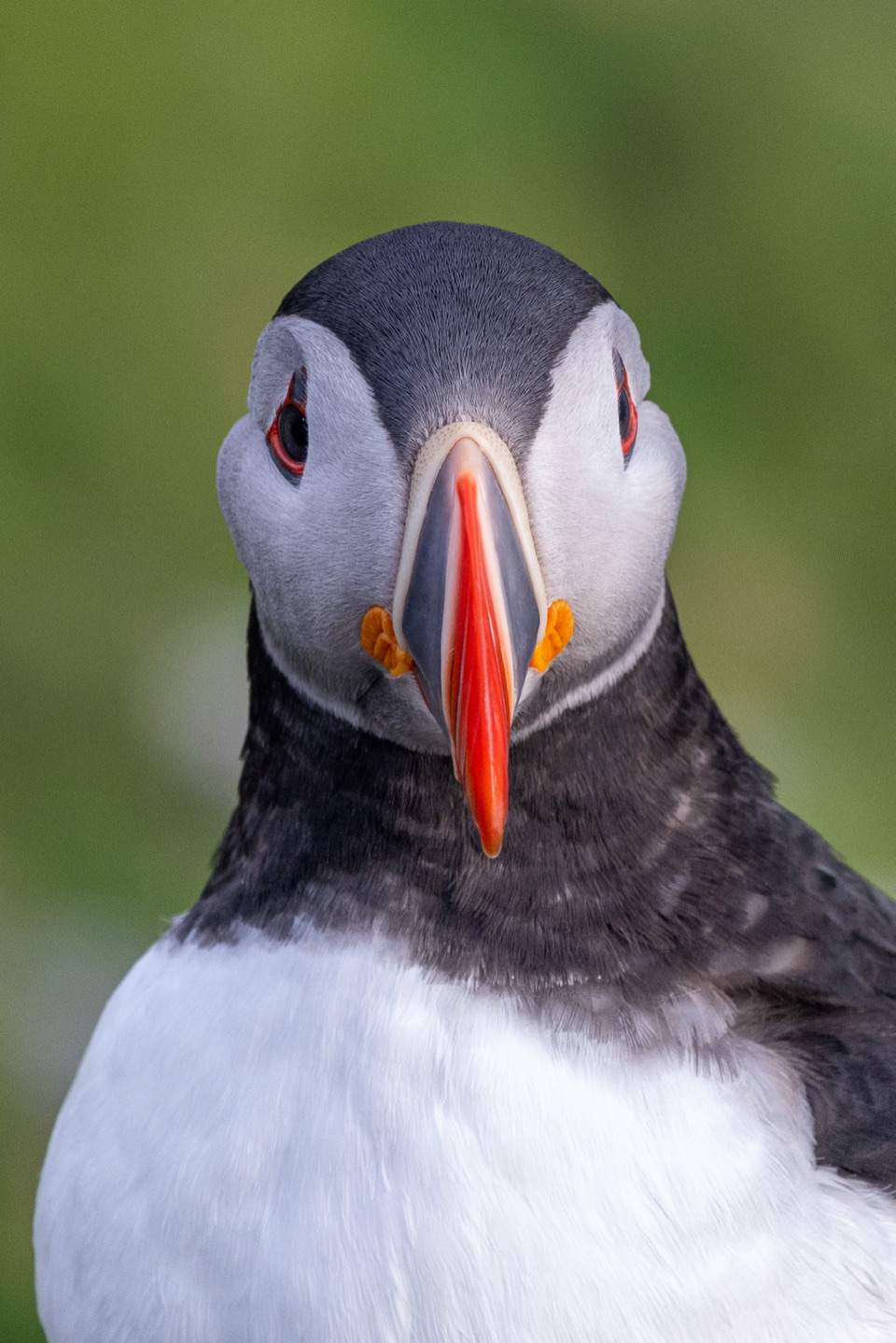
The spread of focal lengths says everything about this place: the same subject, once at 800 mm across the gully, once at 200 mm at arm's length. When the birds stand in golden evening light in front of their burrows, the real difficulty is not distance — it is choosing.
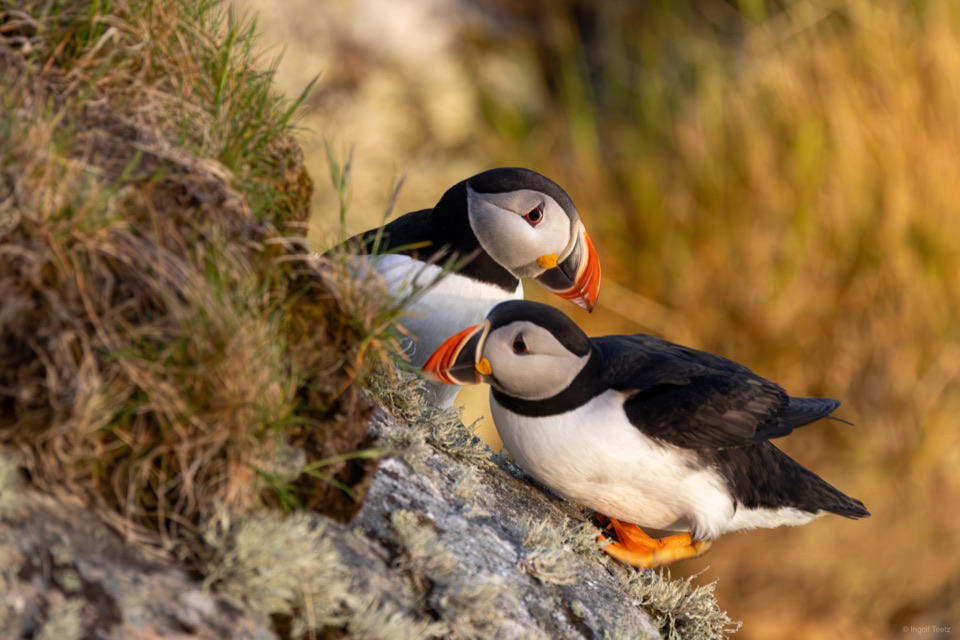
The gannets of Rundebranden
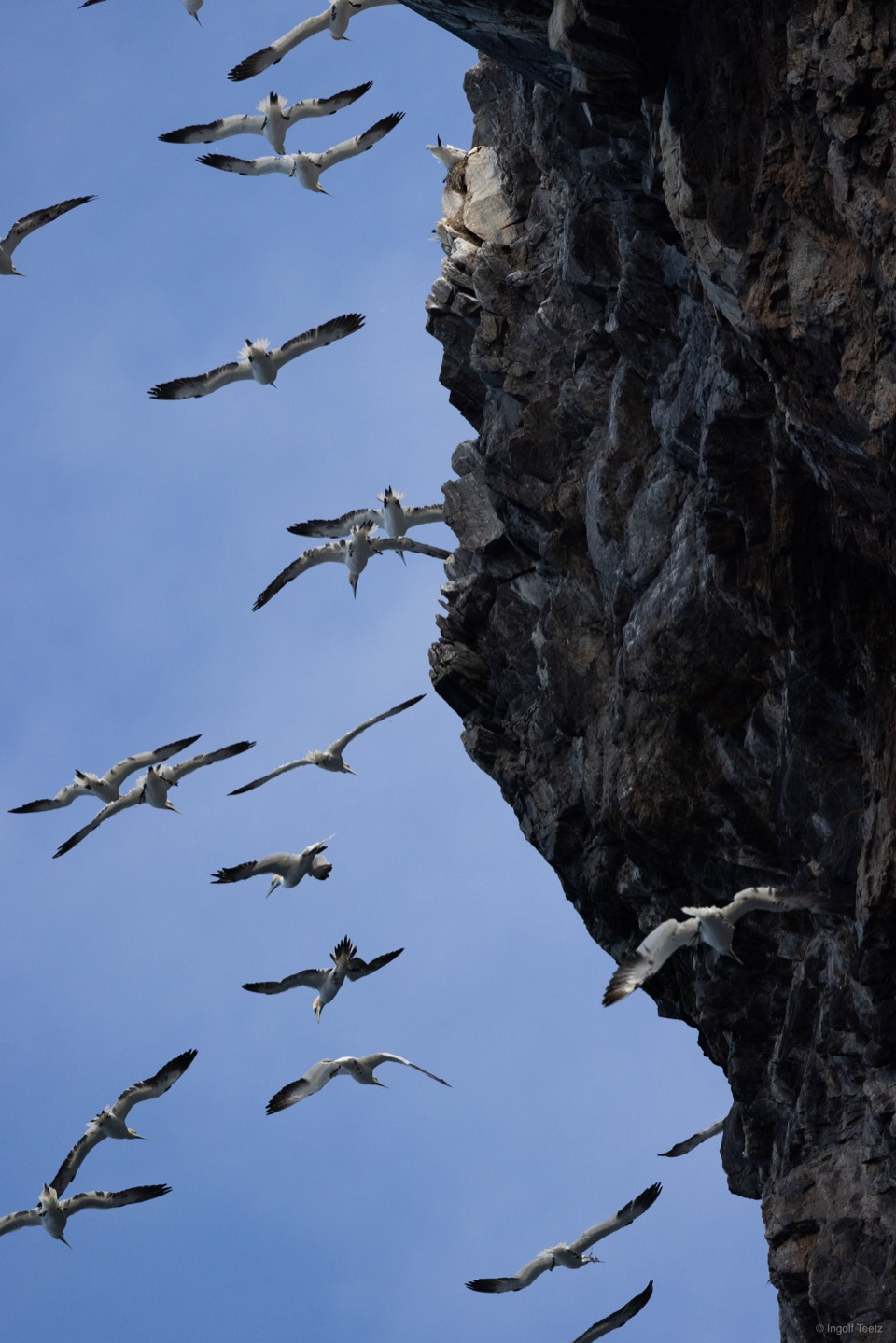
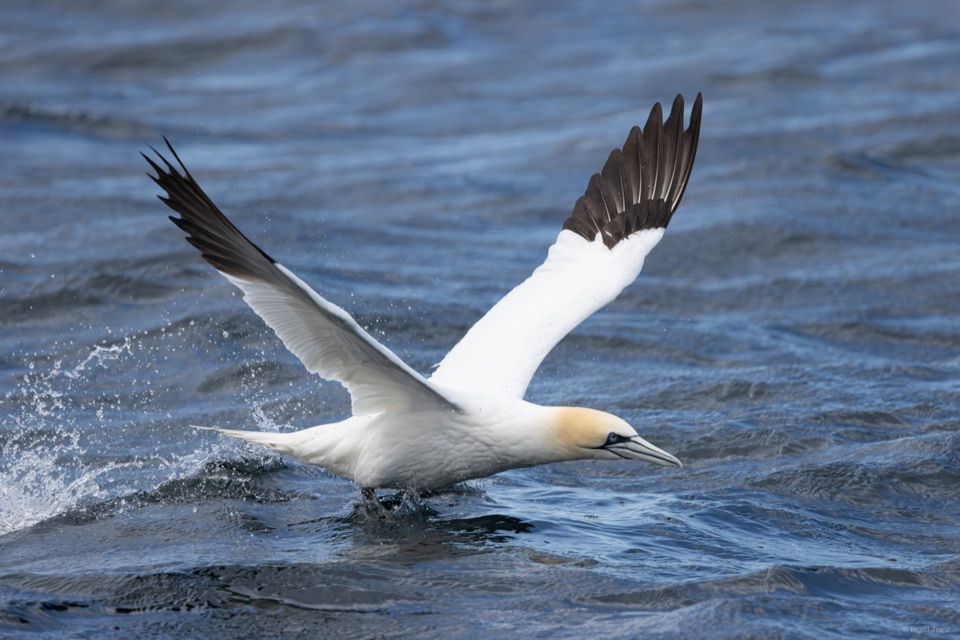
Runde is more than puffins: on the west side, northern gannets breed in a densely packed colony on the sheer wall, joined by kittiwakes, razorbills, shags and skuas patrolling the slopes. From the boat the whole spectacle unfolds from below — the white wall of birds, the constant coming and going, and with a little luck a gannet taking off right next to the boat.
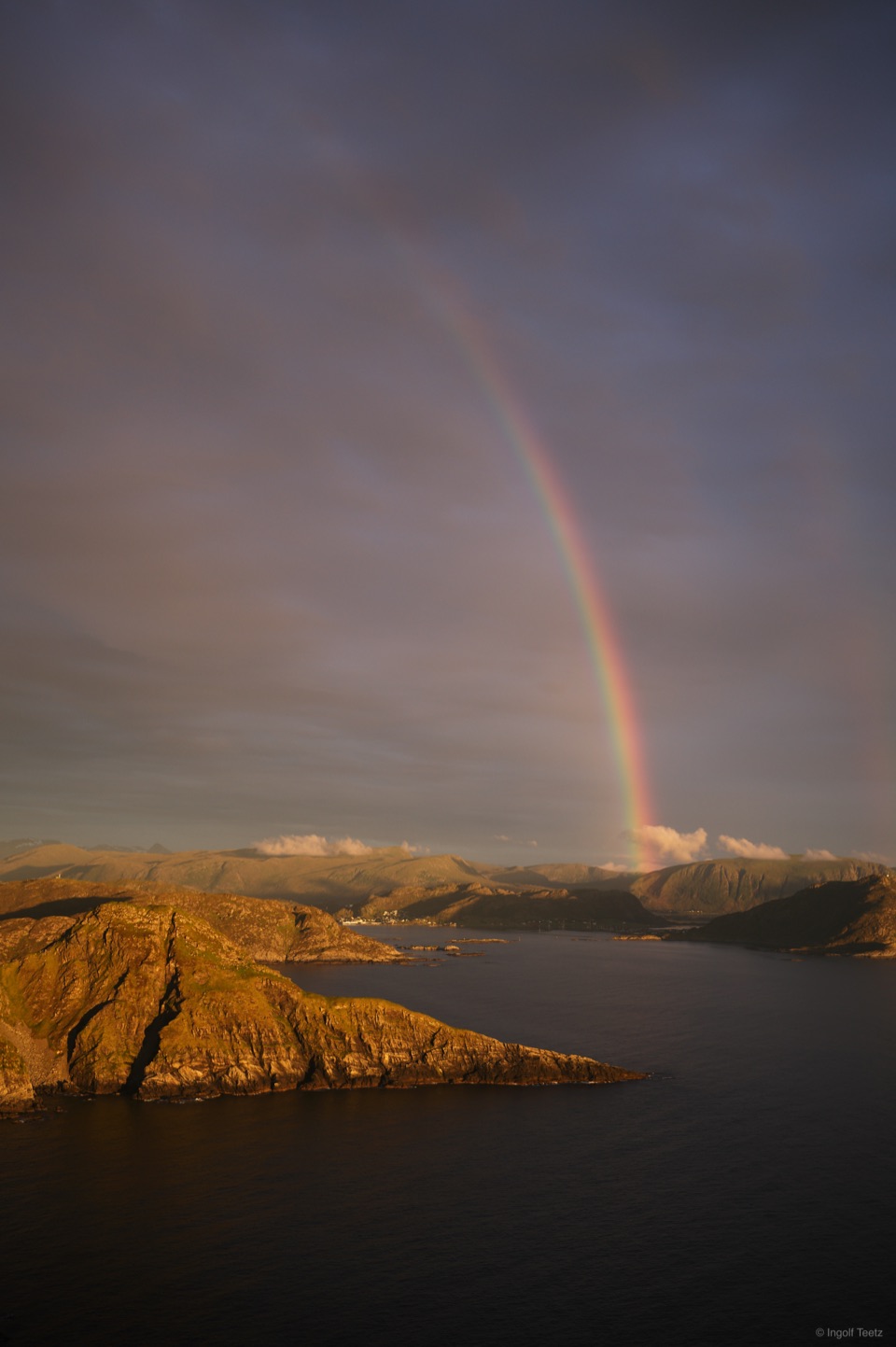
And because the weather on this coast changes by the hour, the postcard shot came free of charge at the end: a rainbow over the cliffs, late in the evening, as the sun slipped under the clouds one more time.
The gear: three telephotos for one cliff
In 2024, Runde was a three-lens outing on the Canon EOS R5: the RF 100-500 mm as the workhorse for flight shots and the colony from the boat, the featherweight RF 800 mm f/11 for subjects across the gully — and, surprisingly often, the RF 70-200 mm f/2.8, because the puffins were simply too close for anything else. For the approaches: 1/6400 s to 1/8000 s — a puffin beats its wings up to 400 times a minute, and in dusk light the ISO may go five-digit for that; noise can be removed, motion blur cannot. The Leica M11-P meanwhile took care of the rainbow. And as always, the full cards went through RAWFetcher in the evenings — the 87 images in this album are what remains of four long nights at the cliff.
More field reports
White-tailed eagles on Smøla, grizzlies in British Columbia, sperm whales in the Azores — all field reports on the blog.