White-tailed eagles on Smøla – finding the sharp hits when everything moves
The island of Smøla off the Norwegian coast has one of the densest white-tailed eagle populations in Europe. You shoot from a boat: 800 mm of focal length, 1/4000 of a second, a dancing horizon. The real work starts afterwards — figuring out which of the many nearly identical frames actually hits.
The problem here isn't volume — it's precision
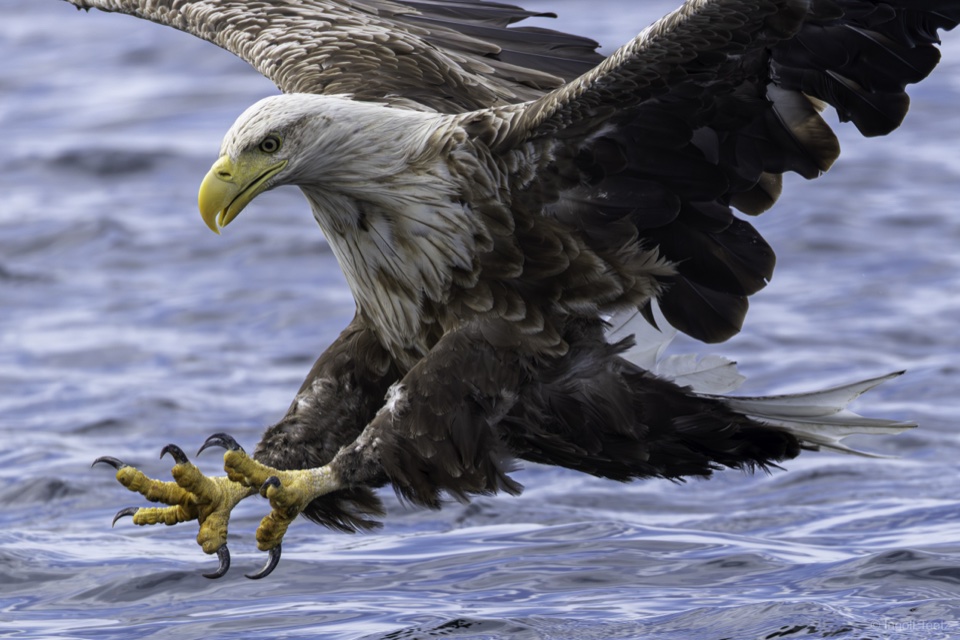
On Martinique the challenge was the sheer volume of burst frames (there's a separate post about that). Smøla is different: an eagle strikes within two or three seconds — and in that time everything moves at once. The bird, the boat, the waves, your own hands on the 800. On the camera display, twenty frames of the same strike all look good. Back home on a big screen, the eye is truly sharp in three of them; in the rest, focus sits on a wingtip, on the spray — or nowhere.
The sharpness score shows where focus actually landed
That's exactly what I use RAWFetcher's sharpness analysis for: it scores every frame and draws a box around the sharpest spot in the image. Box on head and eye — candidate. Box on the water surface or a wingtip — autofocus was a beat too late, and the frame goes out without me zooming in at all. For the close calls there's the 1:1 zoom in the preview: one click, and I see feather structure at native resolution.
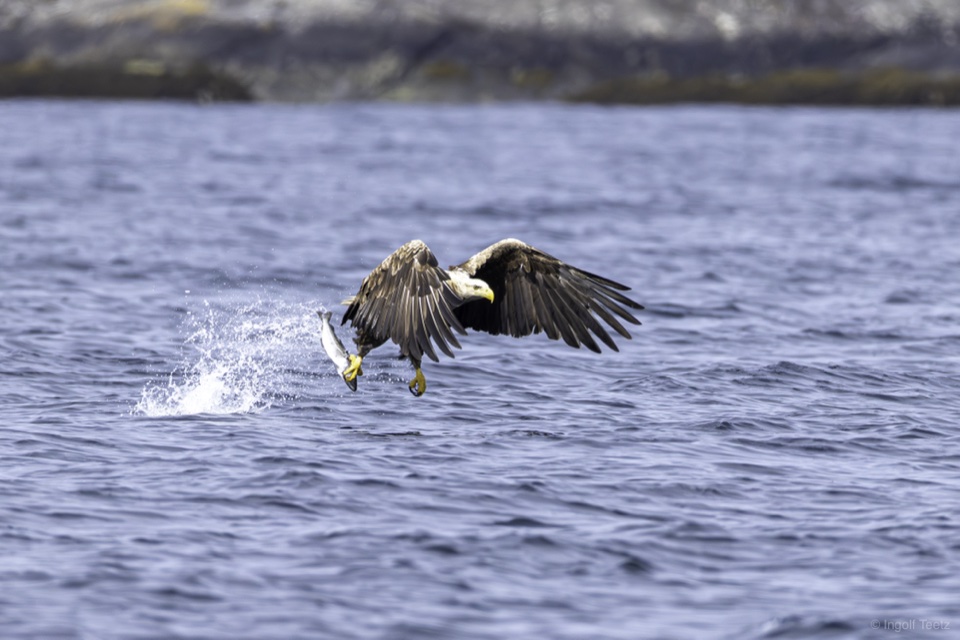
With the sharpness filter in the sidebar (“sharpness ≥ 60”) a boat trip boils down to the technically clean frames, and the aesthetics score floats the strongest compositions to the top. What's left is the pleasant choice between good images — not the hunt for them.
Multi-day trip, one card: the “only new” workflow
On a trip like this, the card stays in the camera for days. In the evening I plug it into the Mac and RAWFetcher remembers everything: previews, scores and ratings from previous days are right there (persistent cache), and the download history knows which images are already saved. The “only new” filter hides them — every evening I cull just the current day, download the keepers into date-based subfolders, done. No duplicate copying, no “which ones did I already have?”.
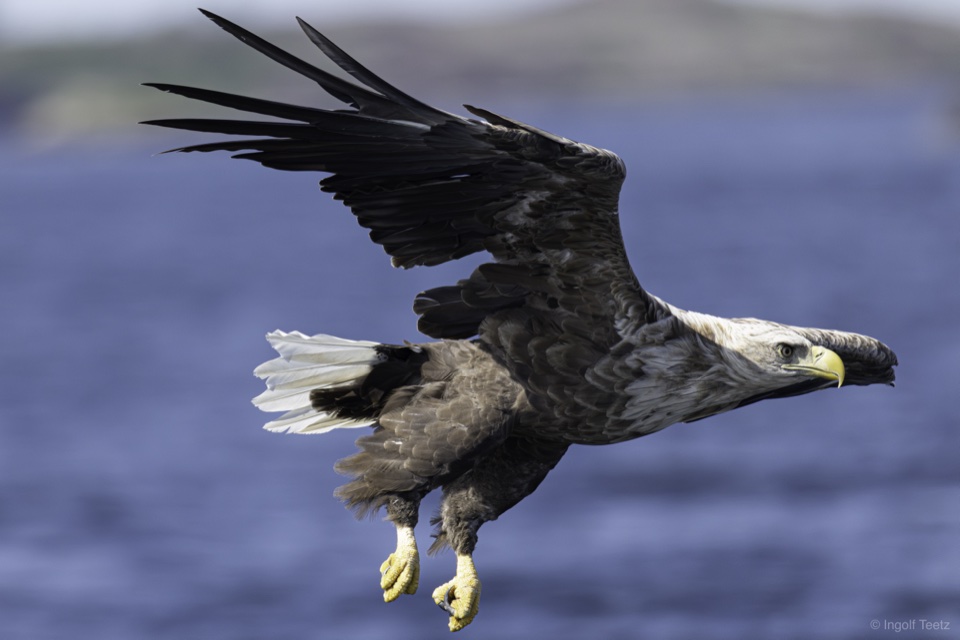
Bottom line: in action photography it's not about who shoots the most, it's about who reliably finds the hits. The sharpness box answers the one question the camera display can't — where focus landed — and the download history keeps a multi-day trip organized.
Try it yourself
RAWFetcher is available on the Mac App Store for $9.99. Insert your card, run the sharpness analysis, find the keepers — before you import a single image.