
Bears, Eagles, Humpbacks – Three Weeks in British Columbia
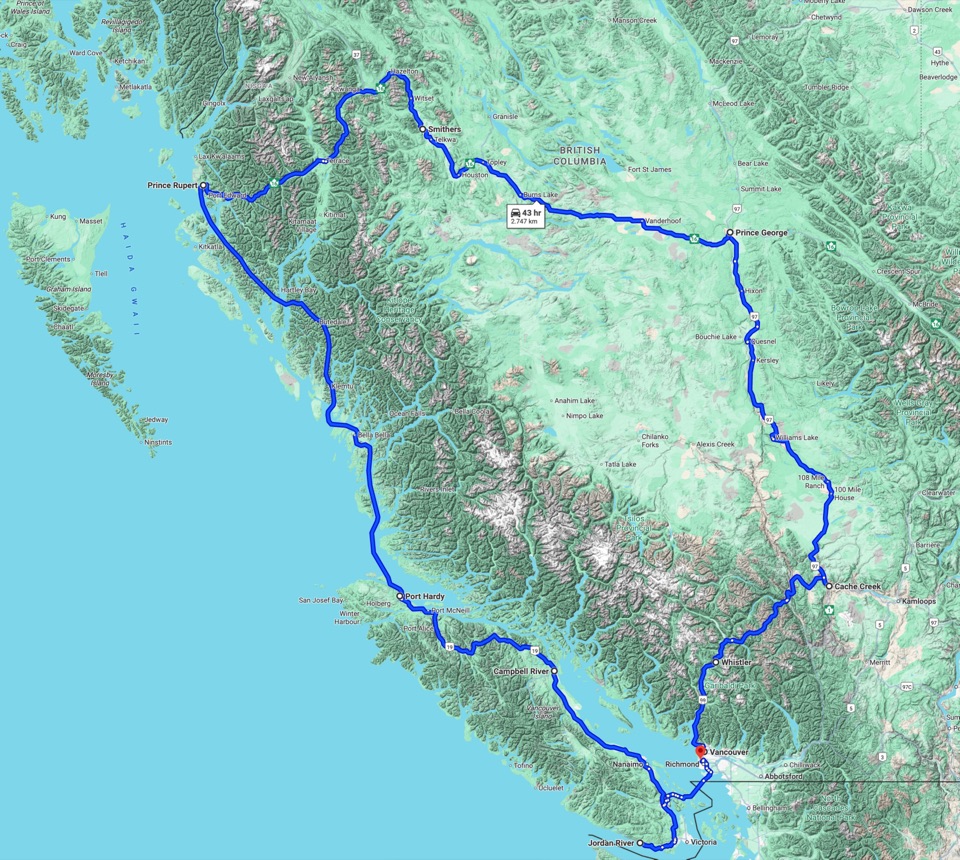
July 2025, just under three weeks, roughly 2,900 kilometres: one big arc through British Columbia — from Vancouver via Whistler and the Cariboo plateau north to Prince Rupert, by ferry down the Inside Passage, and back across Vancouver Island. Along the way: grizzlies, bald eagles snatching fish, breaching humpbacks — and two camera systems that split the work between them.
The route: one big loop through BC
The tour started the classic way: two days in Vancouver (Stanley Park, Capilano, Gastown), then the Sea-to-Sky Highway to Whistler, with marmots and chipmunks above the treeline. From there via Lillooet into the dry expanse of the Cariboo plateau and north in two long driving days — to Hazelton on the Skeena River, home of the ʼKsan totem poles and longhouses, with ospreys circling the Bulkley canyon. End of the overland leg: Prince Rupert on the north coast, the launch point for the boat trip into the Khutzeymateen valley. The way back ran by ferry through the Inside Passage to Port Hardy and then a week down Vancouver Island — Telegraph Cove, Campbell River, the old-growth cedars near Sayward, and finally Victoria.
Khutzeymateen: grizzlies at (almost) eye level
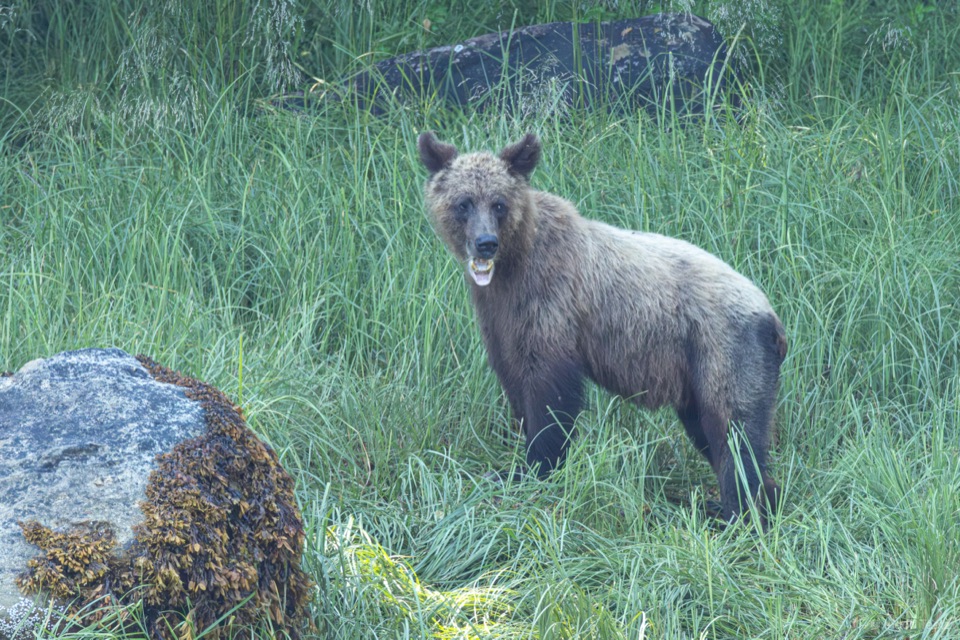
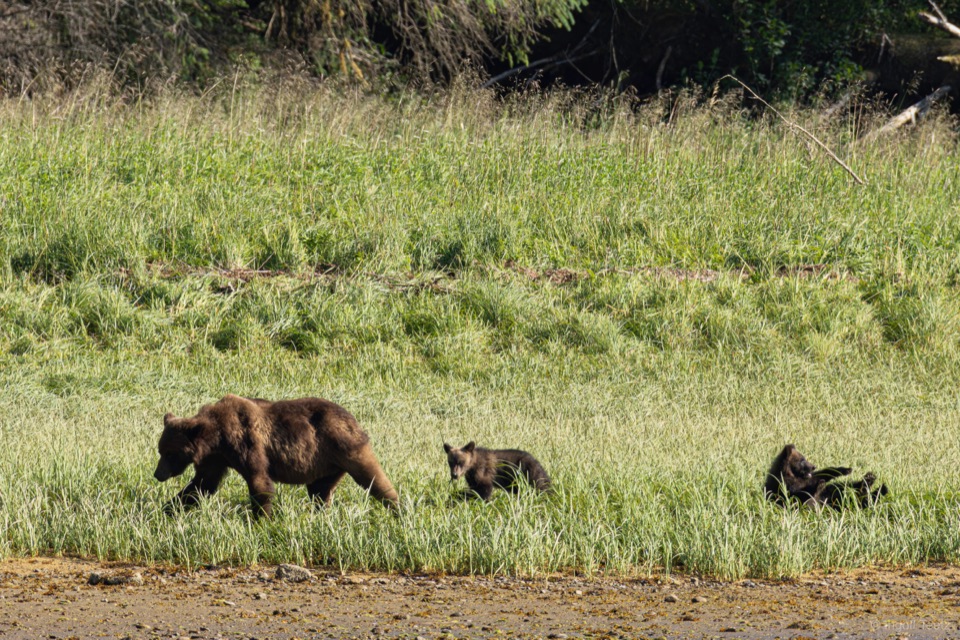
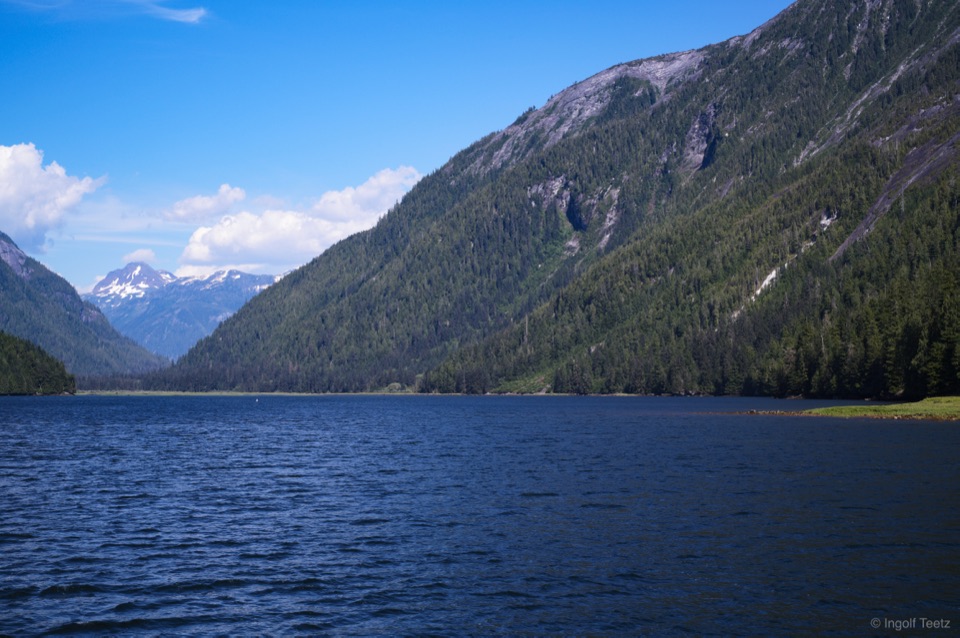
The Khutzeymateen valley north of Prince Rupert is Canada's first grizzly sanctuary — no road access, entry by boat and permit only. In July the bears graze the sedge meadows of the tidal flats like cattle, and that is exactly how we found them: a mother with two cubs along the shore, and a young bear rising out of the tall grass to size up the boat. You shoot from the water, engine idling, at a respectful distance — focal length substitutes for proximity.
The fjord itself deserves its own trip: sheer walls, patches of snow in July, mirror-calm water. For these frames the long lens stayed in the bag — this was the Leica's turf.
Bald eagles: the grab
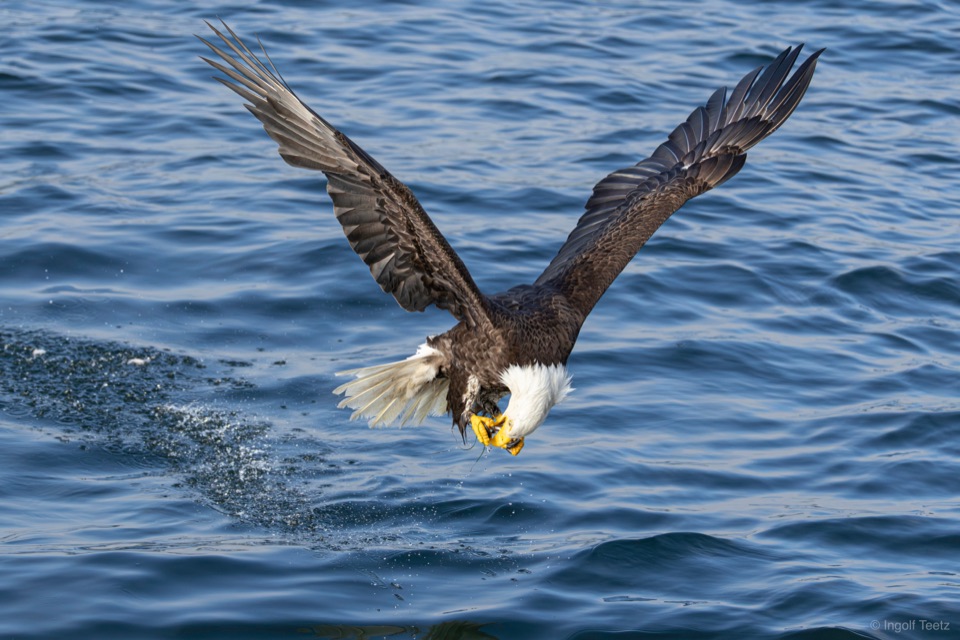
On the same tour the bald eagles showed up — first as white dots in the Sitka spruces, then on final approach to the water. The grab itself takes less than a second: glide in, talons forward, touch, gone. If you are still hunting for the shutter button, you have missed the picture. The recipe is the same as with the white-tailed eagles on Smøla: preselect a fast shutter, let the burst run, pick the bird up early in the viewfinder and follow through.
Discovery Passage: humpbacks and orcas
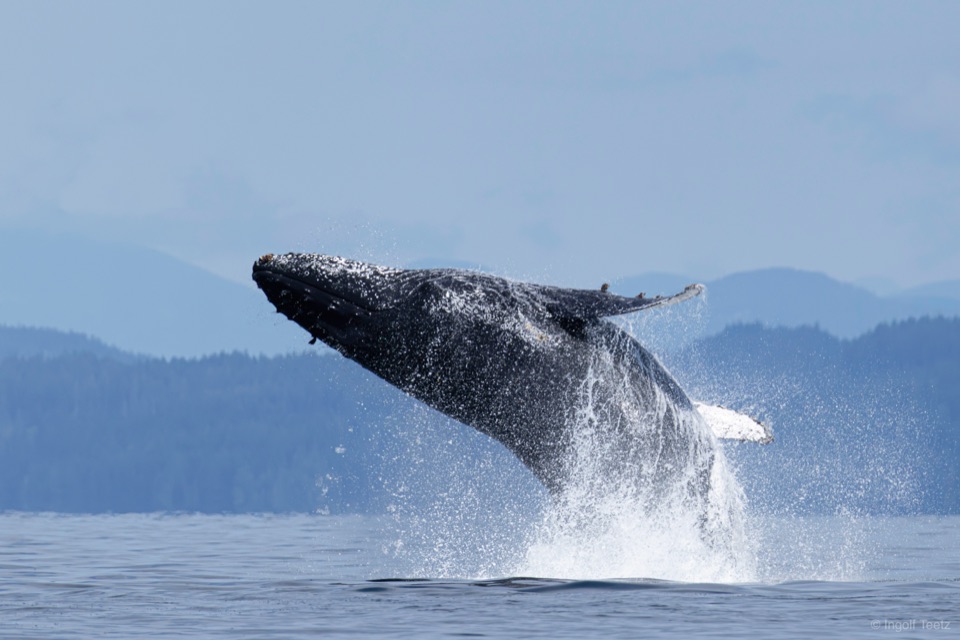
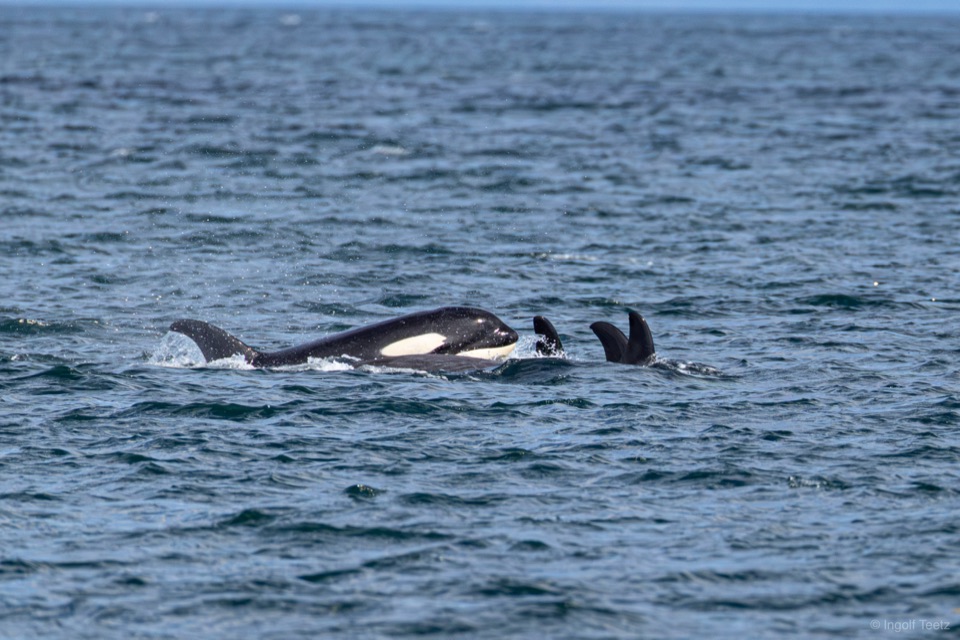
The second boat tour left a week later from Campbell River on Vancouver Island. The waters between the island and the mainland — Discovery Passage and Johnstone Strait — are among the world's best whale grounds in summer: first, humpbacks cruised past with slow, deep breaths, showing their flukes on every dive; then a family of orcas crossed our course. And on the tour's final evening a single humpback started breaching — not once, but again and again, less than 300 metres from the boat.
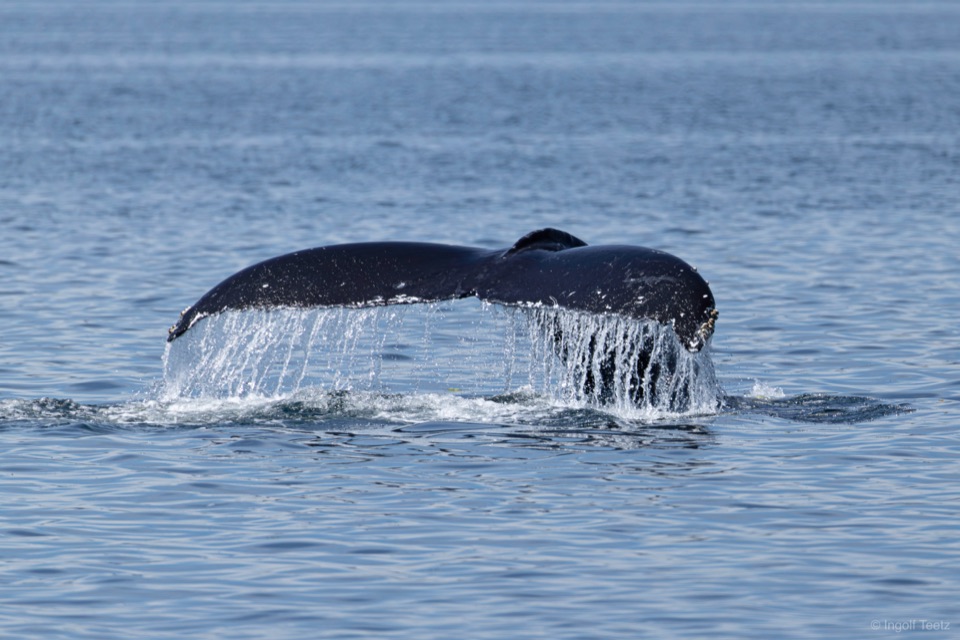
Breaching comes without warning, only with one rule of thumb: where a whale has jumped once, it often jumps again. So keep the camera up, leave 1/4000 s dialled in and let auto-ISO do the work — the series behind the title shot happened exactly that way, handheld at 800 mm from a rolling boat. The stabiliser of the RF 200-800 is what makes that possible at all.
Roadside encore: the black bear
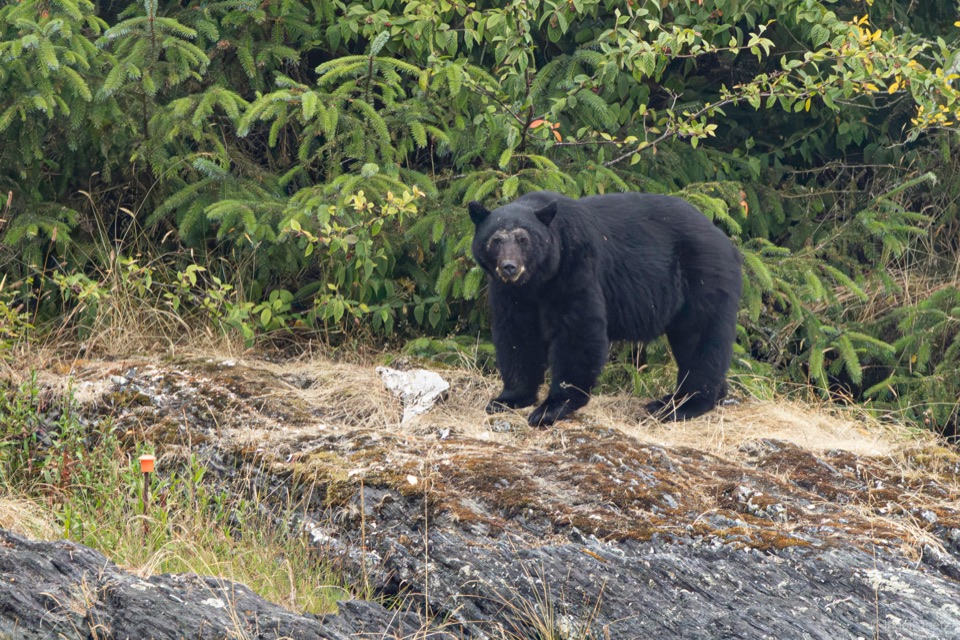
The most relaxed bear encounter of the trip was entirely unplanned: on the coastal road north of Campbell River, a black bear was grazing its way along the shoreline embankment — berries, grasses, the occasional appraising glance. Shot from the car, engine running, window down, done. This is where the second, lighter telephoto paid off, kept ready on the passenger seat for exactly these moments.
The gear: two systems, clear roles
The strict division of labour proved itself. The Canon EOS R5 Mark II with the RF 200-800 mm was the wildlife tool: 45 megapixels for cropping, eye-AF that locks reliably onto eagles and bears alike, and 30 frames per second for breaches and grabs. Alongside it, the RF 100-500 mm as the lighter alternative for the car and for hikes. The rules of thumb that settled in: preselect 1/3200 s to 1/4000 s for action, leave the aperture open (f/9 is a given at the long end of the 200-800 anyway) and hand the ISO to the automatic — this trip ran the whole range from ISO 800 in sunshine to ISO 6400 in shoreline shade.
Next to it, the Leica M11-P with the 35 Summilux, 50 Apo-Summicron, 90 Macro-Elmar and the 16-18-21 Tri-Elmar for landscapes, cities and the quiet moments — 60 megapixels at ISO 64 whenever there was time to photograph deliberately. Two systems also means: no lens changes in the spray zone, each camera keeps its job.
And the memory cards? Three weeks of travel with burst-mode days produce thousands of files. So the evenings always ran the same way: card into the Mac, review just the day's new images in RAWFetcher, check sharpness, file the keepers by date — the 376 pictures this post draws on are exactly the output of that evening routine.
More field reports
How 16,000 hummingbird burst frames became a final selection, and how the sharpness score finds the keepers among diving eagles — on the blog.