
Sperm Whales and the Priolo – Two Weeks on São Miguel
Two weeks in the Azores in the summer of 2024, one island: São Miguel. Offshore, sperm whales patrol the deep water, dolphins ride the bow wave, and in the misty laurel forest of the Serra da Tronqueira lives the Priolo — one of Europe's rarest songbirds. A field report between whale boat and cloud forest, gear notes included.
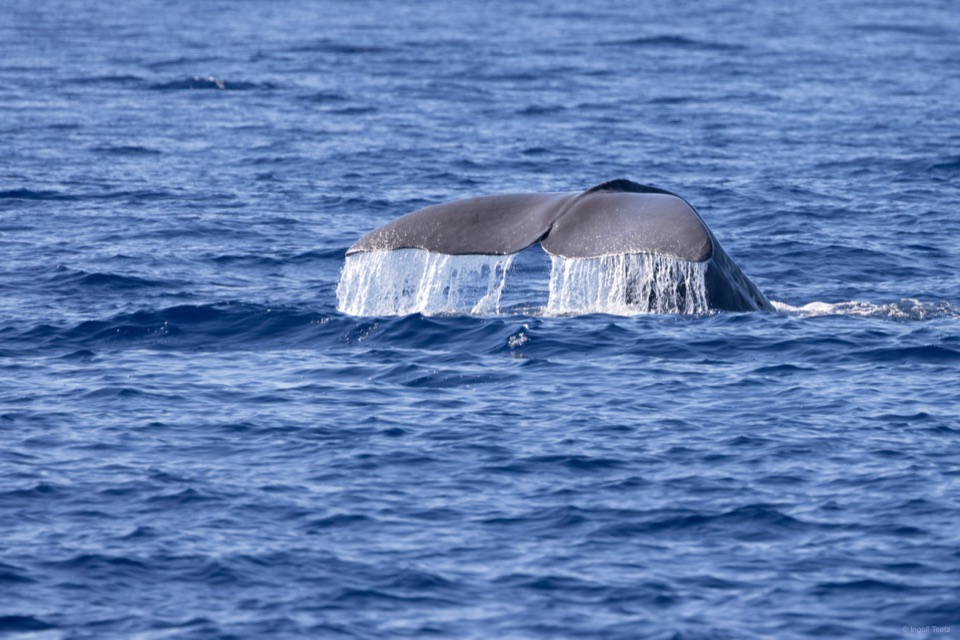
Offshore: the island of sperm whales
The Azores sit in the middle of the Atlantic on the highway of the great whales, and sperm whales are residents here, not passers-by. From the boat it always plays out the same way: the vigia — the whale spotter on land — radios the position, the boat closes in slowly, and then the grey back lies calmly at the surface for minutes, recharging on air. The real photo moment is the dive: the body arches, the fluke rises vertically out of the water and is gone — and so is the whale, for the next 40 minutes. You get exactly one chance per sighting, and it lasts about two seconds.
Between whales there is never a dull stretch: bottlenose and Atlantic spotted dolphins join the boat and surf the bow wave — so close beneath the surface that you can watch them from above.

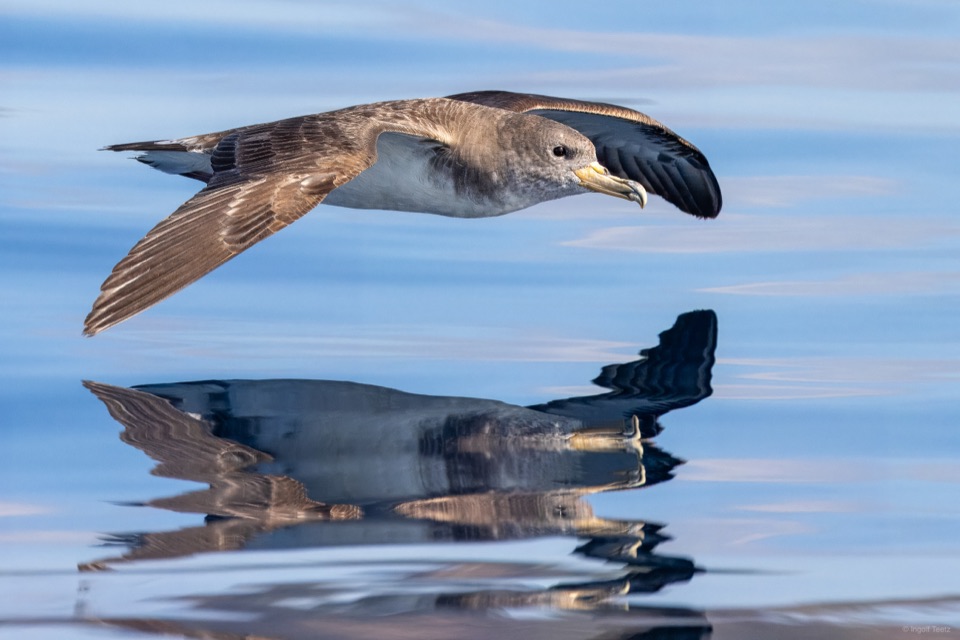
And then there are the Cory's shearwaters — tens of thousands breed in the Azores. On windless days they glide centimetres above the flat water, which turns into a mirror beneath them.
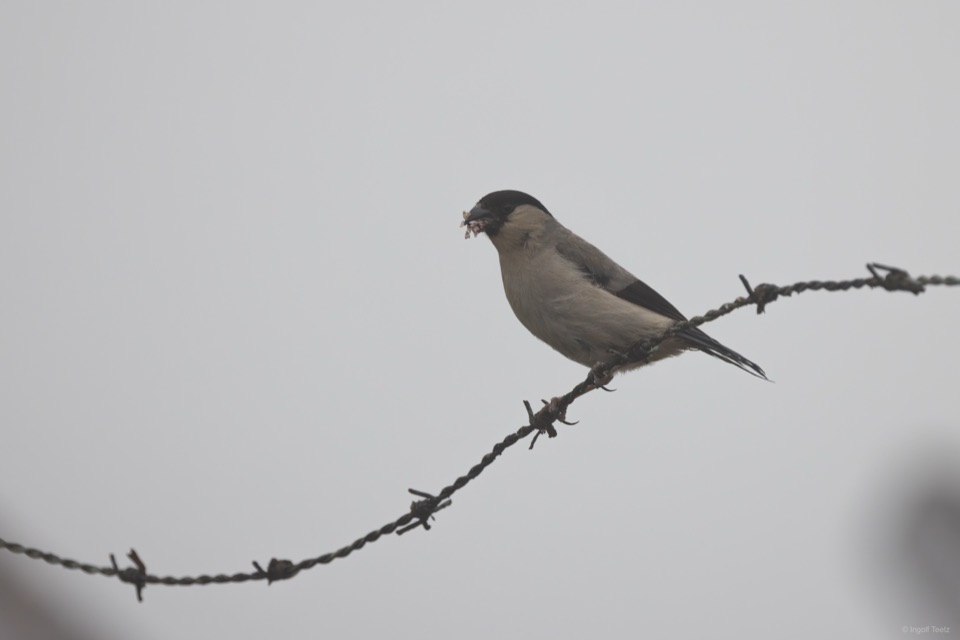
In the laurel forest: the Priolo
The Priolo (Azores bullfinch) exists in exactly one place on Earth: the laurel forest of the Serra da Tronqueira in eastern São Miguel. In the 1990s, with only a few hundred birds left, it was nearly written off; thanks to habitat restoration the population is back in the four digits — and with patience you can find it. Our encounter looked the way bird photography usually does: two mornings of fog, drizzle and silence, and then suddenly there it sat, unspectacular grey-black, berries in its bill. Not a colourful bird — but one that almost nobody has in their portfolio.
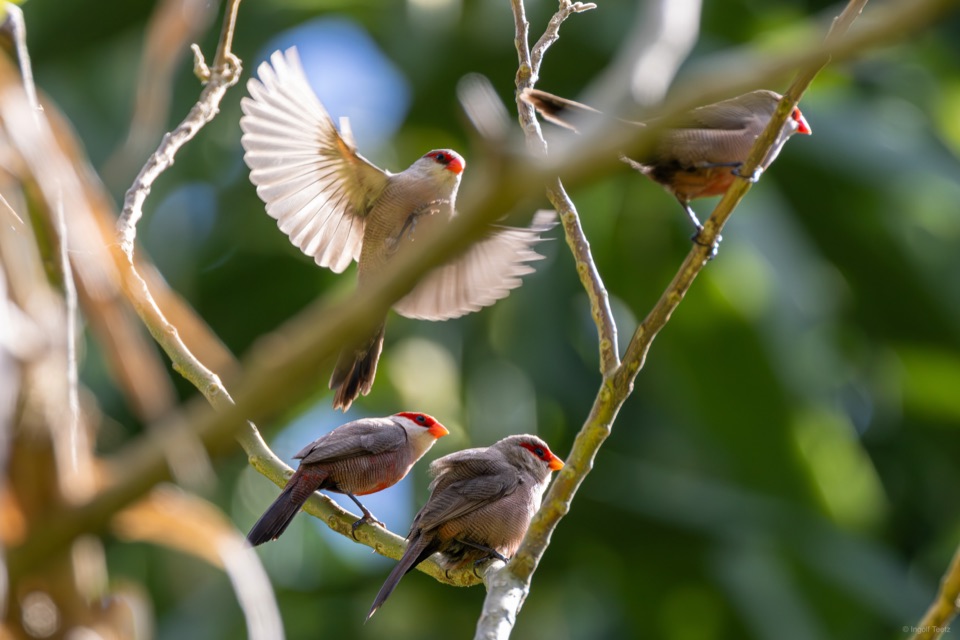
Far more sociable are the introduced common waxbills, moving through the valleys in chattering flocks — and with the Azores chaffinch and the Atlantic canary the island has more endemics and Macaronesian specialities on offer.
The island in between: tea, flower carpets, crater lakes
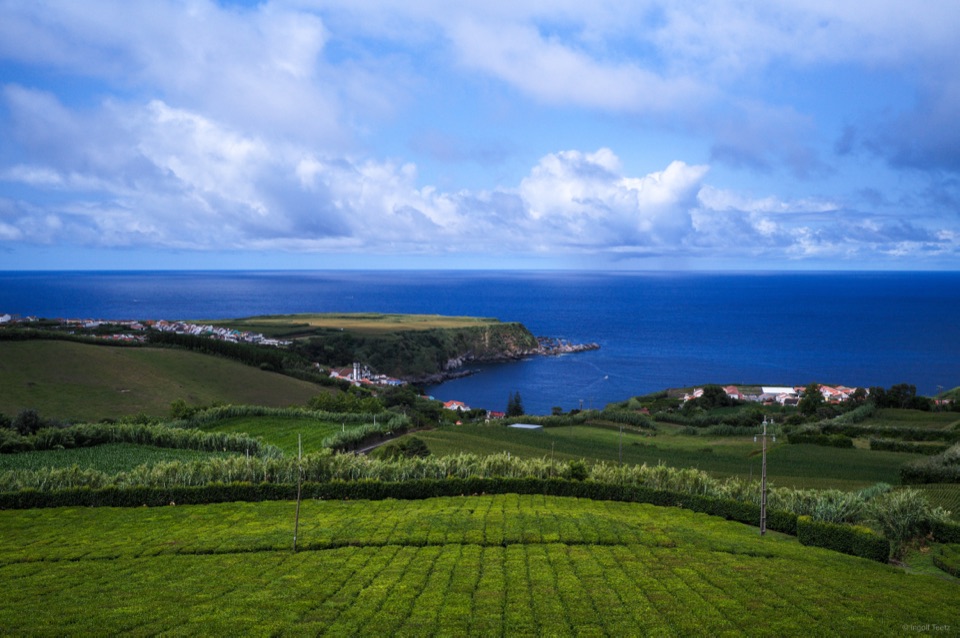
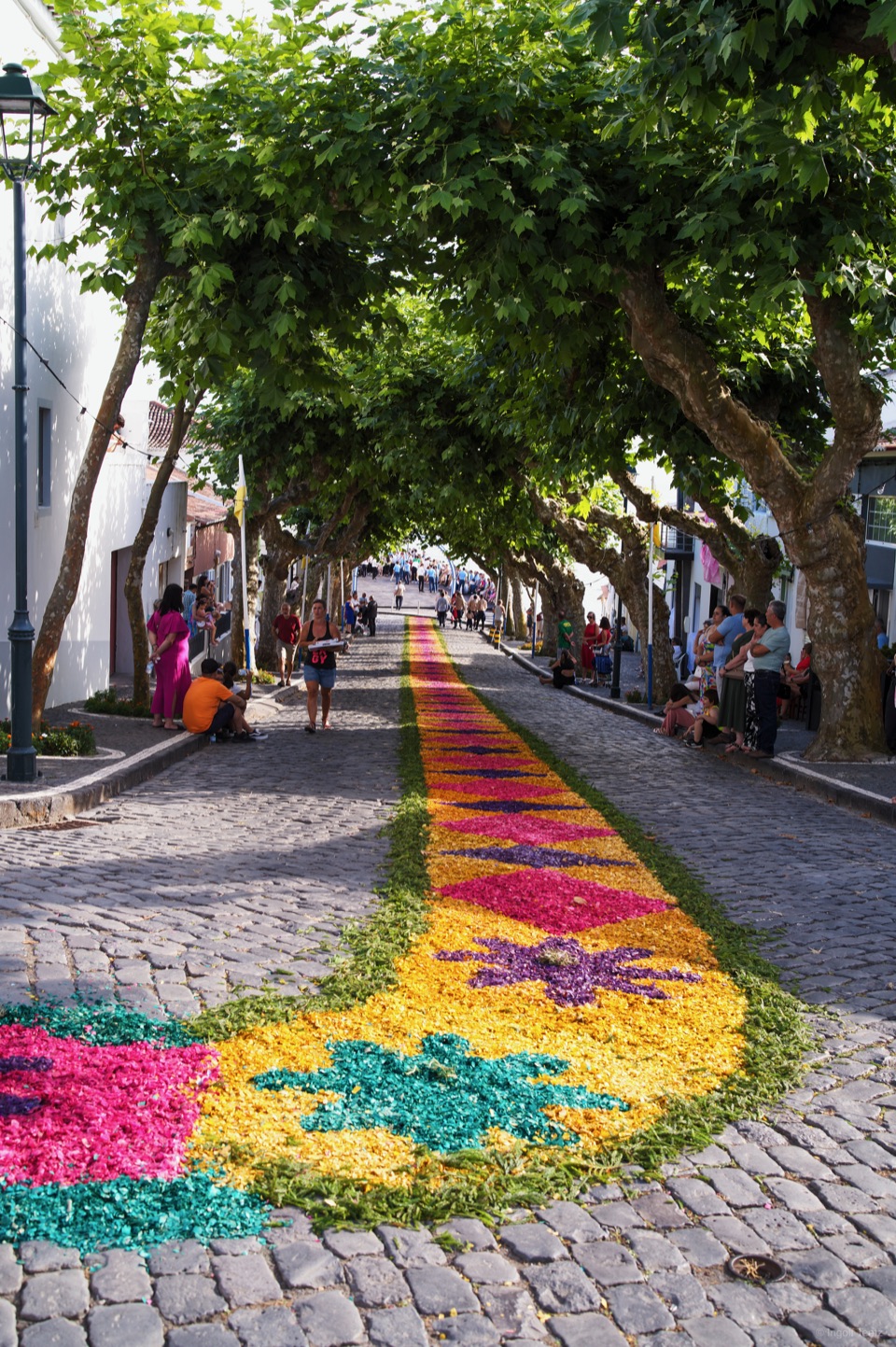
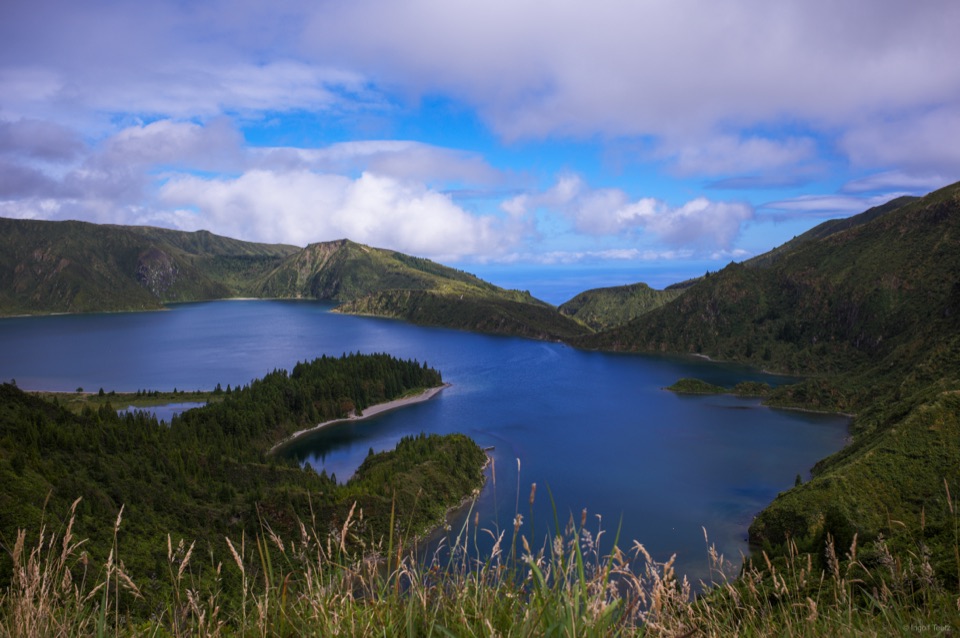
Between tours, São Miguel shows why it is called the green island. In Gorreana, tea has been growing since 1883 — Europe's oldest (and only remaining) tea plantation, its fields rolling down towards the sea. In the villages, communities were laying out their flower carpets for the summer processions, kilometre-long patterns of dyed wood shavings and petals. And above it all sit the crater lakes — Lagoa do Fogo on one of the rare days without its lid of cloud.
The gear: one camera for the sea, one for the island
In 2024 the wildlife rig was still the Canon EOS R5 with the RF 100-500 mm, stretched to 700 mm with the 1.4x extender when needed. On the boat the setup earned its keep: light enough to hold ready for hours, and for that one fluke chance all that matters is that the camera is already at your eye when the back starts to arch. For the low-flying shearwaters: 1/4000 s and burst mode, the same recipe as for any fast bird. For the Priolo in the dark laurel forest, the stabilised 500 and a willingness to let the ISO climb did the job.
The Leica M11-P with the 28 Elmarit and the two 35s covered the rest of the island — lanes, tea fields, crater lakes. A year later in British Columbia this evolved into the R5 Mark II with the RF 200-800; the division of labour stayed the same. And here too the routine held: card into the Mac each evening, review the day in RAWFetcher, file the keepers — the 101 images in this album are what two weeks were allowed to leave behind.
More field reports
Grizzlies and humpbacks in British Columbia, hummingbirds on Martinique, white-tailed eagles on Smøla — all field reports on the blog.